Articles

Flood impact forecasting and innovative financing for anticipatory action in Pakistan

In August 2025, rising flood risk in Pakistan’s Indus River basin led to the activation of the Start Ready programme. Using JBA’s Flood Foresight technology, forecasts were translated into impact triggers, enabling early financing for humanitarians to support vulnerable communities ahead of peak flooding.

This article outlines the science behind the activation and the humanitarian response it enabled.

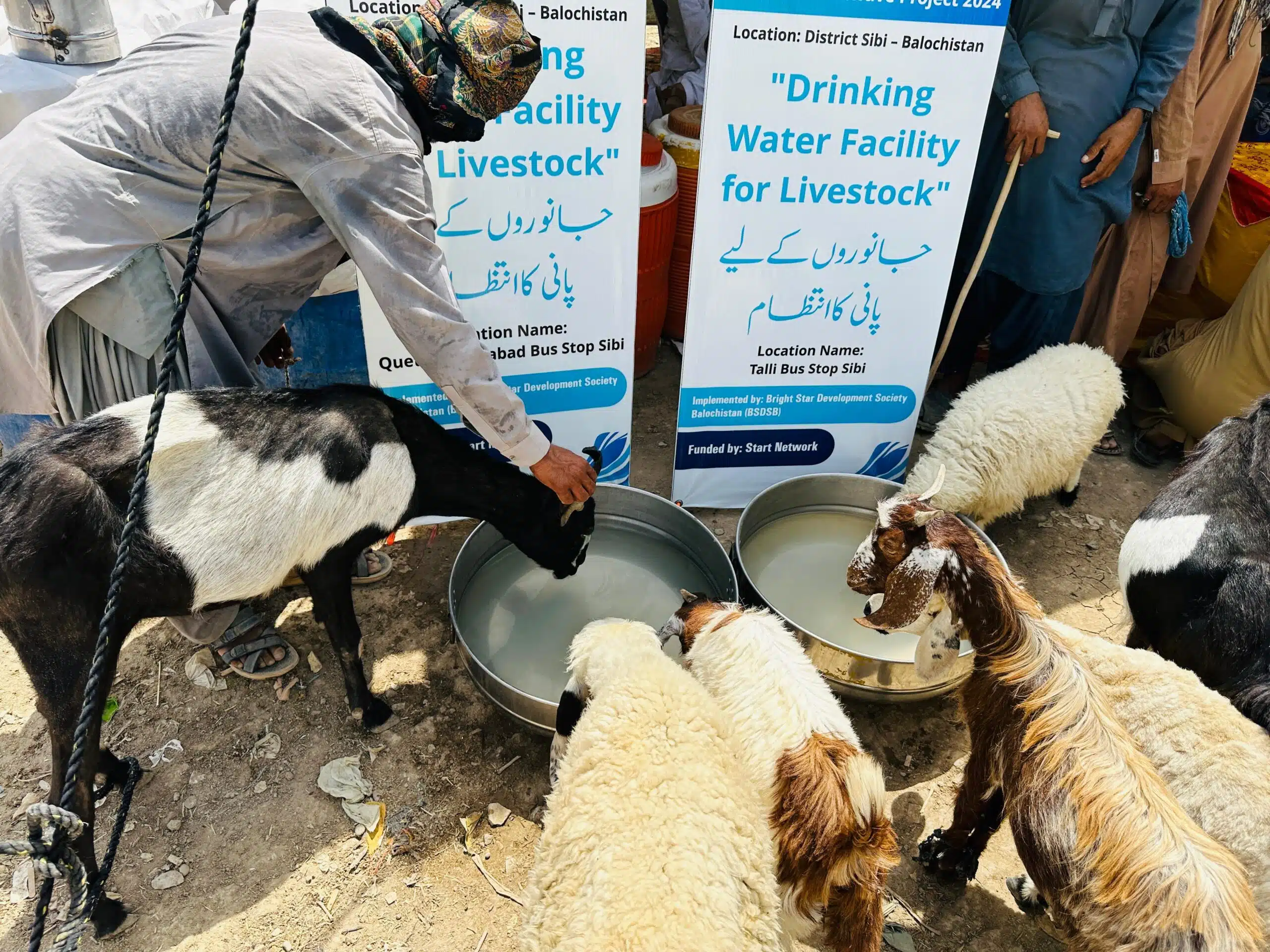
Livestock drinking from metal water containers provided through an anticipatory action project in Pakistan.

Contents:

Flood risk in Pakistan

Riverine flooding during the monsoon season is a recurrent challenge for Pakistan, with heavy rainfall in the Indus River basin leading to inundation of agricultural land, settlements, and infrastructure. Climate change and urbanisation are projected to increase both the intensity and frequency of such events, placing further strain on communities and services.

Conventional humanitarian action centres on response – once flooding is already under way. However, anticipatory action is an alternative approach that links forecasts to financing, enabling early action ahead of the peak flow to minimise impacts.

Building anticipatory systems for floods

Start Network partnered with JBA Global Resilience to design and operationalise an anticipatory flood forecasting and risk financing system. By combining JBA’s Flood Foresight technology with Start Network’s Start Ready disaster risk financing scheme, impact-based forecasts are directly triggering pre-arranged humanitarian funding.

In Pakistan, triggers are based on forecast riverine flooding. The system provides daily forecasts, pre-defined trigger thresholds, and a financing mechanism that releases funds when those thresholds are met.

The August 2025 activation

Exceptionally heavy monsoon rainfall throughout August and into early September 2025 drove widespread flooding across Pakistan’s Indus River basin. Rainfall was estimated at 21% above normal, and up to 36% above normal in some parts of Punjab (World Food Programme, 2025; NASA Earth Observatory, 2025), as an active monsoon trough extended across northern and eastern Pakistan into India.

On 25 August 2025, consecutive forecasts indicated worsening riverine flooding in parts of Pakistan, with population impact estimates surpassing the agreed thresholds. This triggered a Start Ready activation, unlocking £500,000 in pre-arranged financing so members could act before floodwaters peaked.

Humanitarian response on the ground

With funding in place ahead of the peak, Start Network members moved quickly to support 54,000 people in the provinces of Punjab, Khyber Pakhtunkhwa and Sindh. Early actions included:

  • Providing shelter kits, non-food items (NFIs), hygiene kits and food assistance
  • Sharing early warning messages and supporting rescue authorities
  • Running mobile health camps and offering psychosocial first aid
  • Delivering safe water and improving water, sanitation and hygiene (WASH) infrastructure

These actions helped reduce loss of life and livelihoods, support the safety and dignity of at-risk groups, strengthen local resilience, and reinforce community-based disaster risk management.

How the system works

To enable the August 2025 activation, the Pakistan system combines advanced flood risk modelling, flood forecasting and impact quantification to provide a transparent basis for anticipatory action. It involves four key steps:

Flood risk modelling: Using JBA’s Global Flood Models, the underlying flood risk to populations was quantified, producing outputs such as annualised loss estimates and exceedance probability curves for each province and district. These metrics informed the design of population-based trigger thresholds.

Probabilistic forecasting: River discharge forecasts from the Copernicus Global Flood Awareness System (GloFAS) were combined with JBA’s Global Flood Maps through its Flood Foresight technology to generate daily probabilistic forecasts of flood extent and depth.

Population impact analysis: Forecast inundations were combined with population datasets to provide daily estimates of populations at risk of flooding, up to 10 days in advance.

Triggering payment: With each forecast model run, the impact estimates are cross-checked with the pre-defined trigger thresholds. Automated systems communicate this information directly to the Start Network team who verify whether the agreed conditions are met for activation. If approved, Start Network’s protocols for dissemination of funds are activated, enabling on-the-ground activities to commence.

Knowledge sharing through collaboration

In the period following the activation, a knowledge exchange workshop between Start Network, JBA and the Pakistan Meteorological Department (PMD) in Islamabad. The workshop focused on familiarisation with the methods, data and models used in Start Ready and PMD. We reinforced our shared aim to localise the models used in Start Ready to the greatest extent practical.

Flood Foresight offers a flexible framework for integrating global, national and local models and data, whilst also delivering a level of technical rigour that allows reinsurance to be used as an added layer of protection. This innovative risk financing means Start Ready can manage its entire risk pool more efficiently and predictably, enabling it to reach more communities facing climate threats.
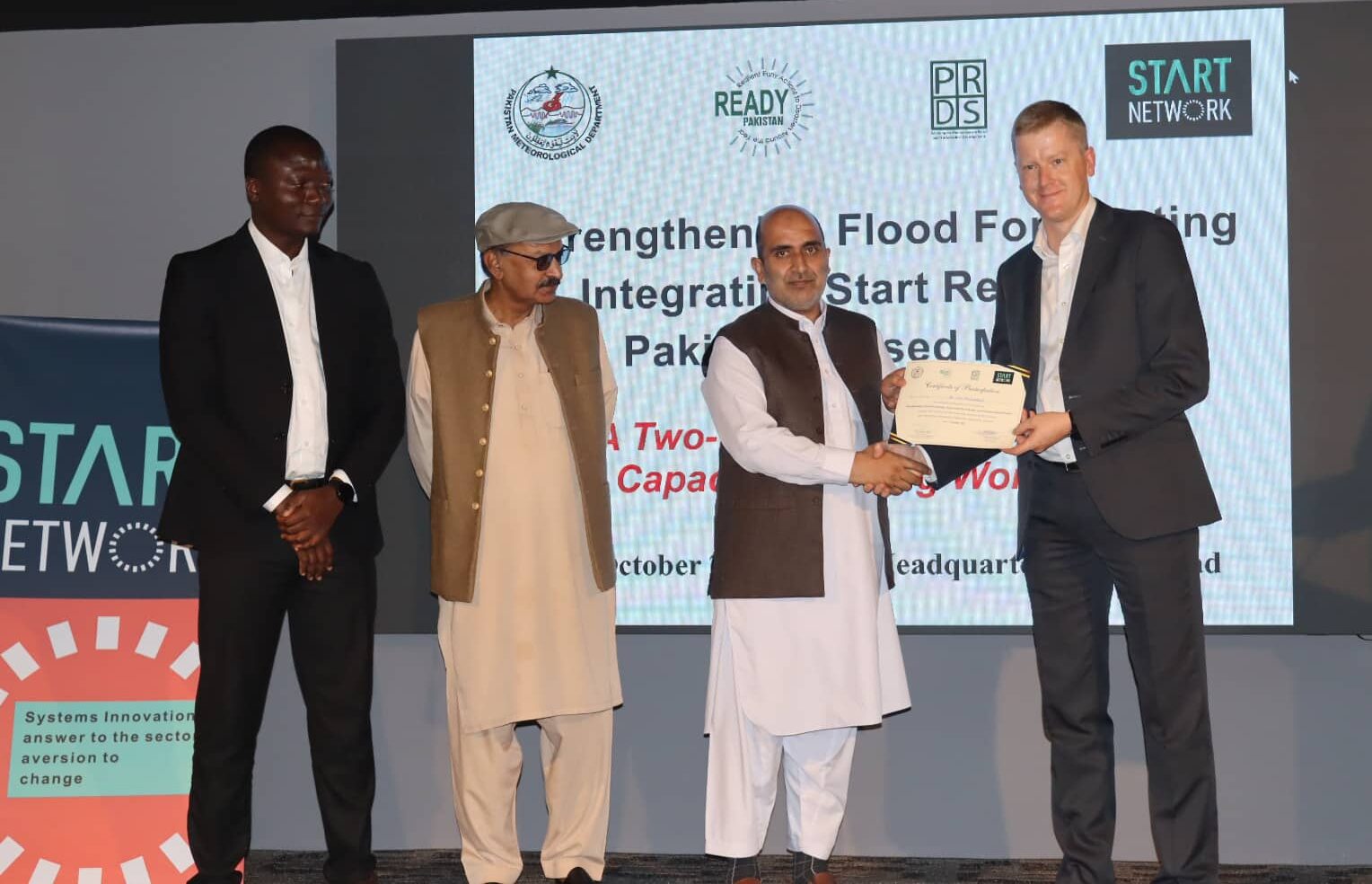
Representatives from JBA Global Resilience, the Pakistan Meteorological Department and the Start Network at a flood forecasting and anticipatory action capacity building workshop in Islamabad.

Representatives from Start Network, PMD and JBA Global Resilience at knowledge exchange workshop, Islamabad

A model for future resilience

The Pakistan activation demonstrated how robust forecasting, clear triggers and pre-arranged finance can combine to enable timely humanitarian action. It also highlighted the value of collaboration between scientific and humanitarian expertise.

Through the combination of reliable flood impact forecasts to pre-arranged humanitarian finance, Start Network and JBA are advancing a practical model for early action that reduces risk, protects lives, and supports more resilient futures.

By linking flood impact forecasts with pre-arranged financing, we can translate science into practical steps on the ground. This allows funds to be released when they are most needed, enabling our members to deliver timely support such as shelter, food, and health services before floodwaters peak.

Abdourazack Alassane, Start Network

INSIGHTS​

Other articles​

Discover more about the challenges and solutions shaping resilience and sustainable development across the globe.

Input your search keywords and press enter.