
Paul Maisey, Director and expert in disaster risk financing at JBA Global Resilience, explains how risk information and financial planning can work together to make funding available when it is needed.
Ready to discuss your next project? Contact our team today.
As extreme weather events become more frequent and severe, their effects on lives, livelihoods and economies are growing. This is increasing the need not only to understand disaster risk, but also to plan for its financial consequences.
The insurance and finance sectors have a long history of assessing and managing risk. These approaches are increasingly being applied in countries facing significant climate risks, contributing to the wider use of disaster risk financing (DRF). DRF is a structured approach to planning the provision of funding for disaster response and recovery.
DRF connects risk information with financial planning, helping organisations consider what costs and financial pressures could arise, when funding would be required, what it would be used for, and which financial arrangements would be most appropriate. By considering funding needs and securing finance before a crisis occurs, organisations can reduce reliance on emergency appeals and unplanned budget reallocations and respond more quickly and effectively when an event occurs.
DRF can be applied at different scales, from national strategies designed to protect public finances to arrangements developed by humanitarian organisations, financial institutions or businesses to meet specific disaster-related funding needs.
No single financing instrument is likely to be suitable for every event. Different sources of finance vary in their cost, availability, speed and certainty, and should be selected according to the purpose they are intended to serve. These mechanisms can include:
Different sources of finance can also be combined through risk layering (Figure 1). A typical approach may use contingency funds for more frequent, manageable impacts, contingent finance for an intermediate layer, and insurance for larger and less frequent events with a greater impact. The appropriate combination will depend on the risk, how much cost the organisation can absorb, how quickly funding is needed and what it will be used for.
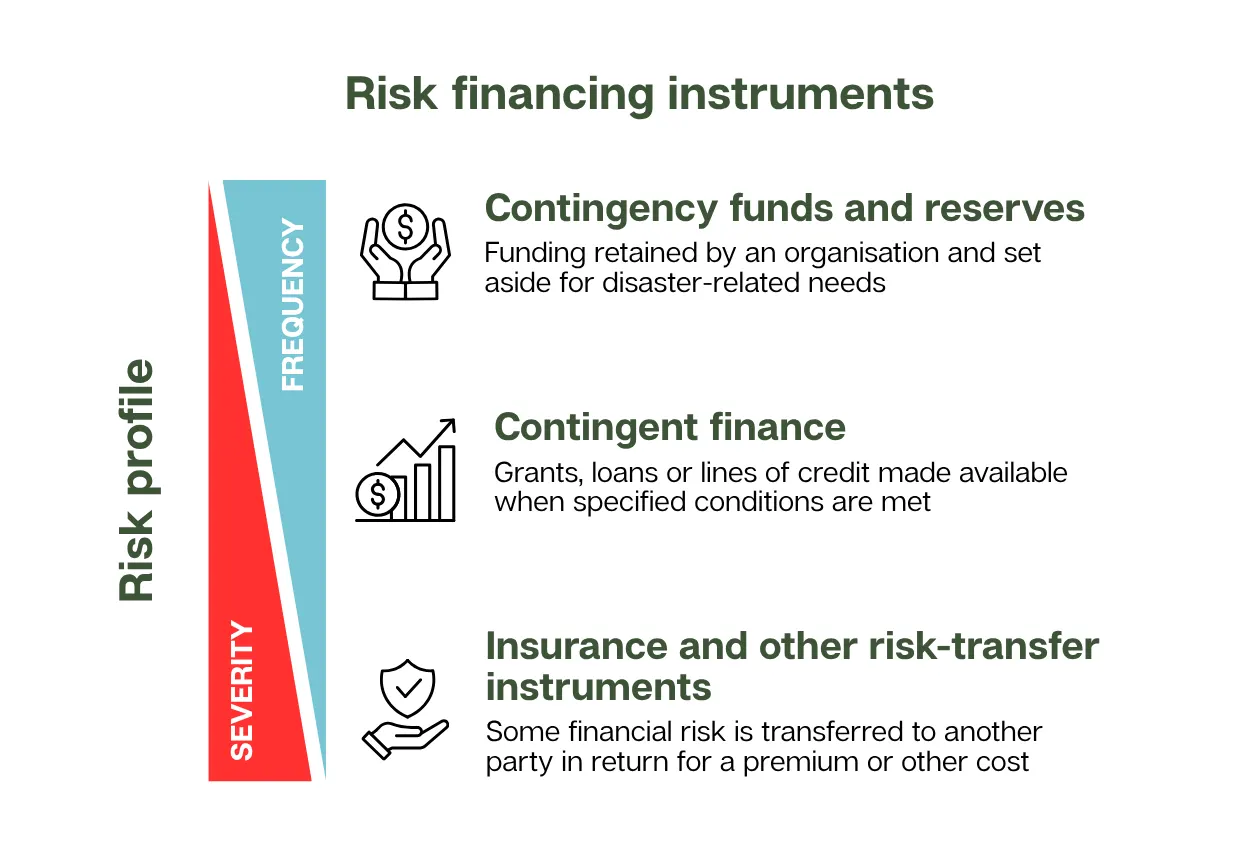
Figure 1: Matching risk financing instruments to different levels of risk
Some financial arrangements release funding when a predefined trigger is reached. Triggers may be based on observed or forecast conditions, such as rainfall or river levels, or on modelled estimates of impacts, such as the number of people or value of assets affected. Because the conditions are agreed in advance, funding can be released without waiting for a full assessment of actual losses.
Trigger-based approaches can support different types of action. Forecast-based triggers may release finance before the most severe impacts occur, enabling organisations to take anticipatory action. Other triggers may provide funding after an event to support emergency response, recovery or the continuity of essential services.
Parametric insurance is one example of a trigger-based DRF instrument. It provides an agreed payment when a specified threshold is reached, rather than reimbursing assessed losses. Trigger-based approaches can also be used within catastrophe bonds, contingent financing arrangements and humanitarian financing mechanisms. Their effectiveness depends on how closely the selected trigger reflects the impacts or financial needs the arrangement is intended to address.
Putting disaster risk financing into practice requires organisations to connect risk information, financial decisions and practical action. Several considerations influence whether an arrangement will work as intended:
As disaster risks place growing pressure on lives, livelihoods, public finances and organisations, DRF helps governments and individual organisations connect their understanding of risk with decisions about finance and action – by assessing potential funding needs in advance, combining appropriate sources of finance and establishing clear arrangements for accessing and using funds.
At JBA we support governments, humanitarian organisations and financial institutions to develop and implement DRF solutions. We combine hazard and risk modelling with expertise in financial risk analysis, parametric trigger design and operational monitoring. Our contribution can range from assessing risk and exploring financing options to developing trigger-based mechanisms, monitoring agreed thresholds and providing independent calculation-agent services. We also work with clients and stakeholders to build the understanding and practical arrangements needed to turn finance into timely action. Our aim is to ensure that risk information leads to practical financial decisions, making funding available for effective action when it matters most.
Ready to discuss your next project? Contact our team today.
Discover more about the challenges and solutions shaping resilience and sustainable development across the globe.